Differences Between CNC Lathe, CNC Automate and CNC Sliding Lathe
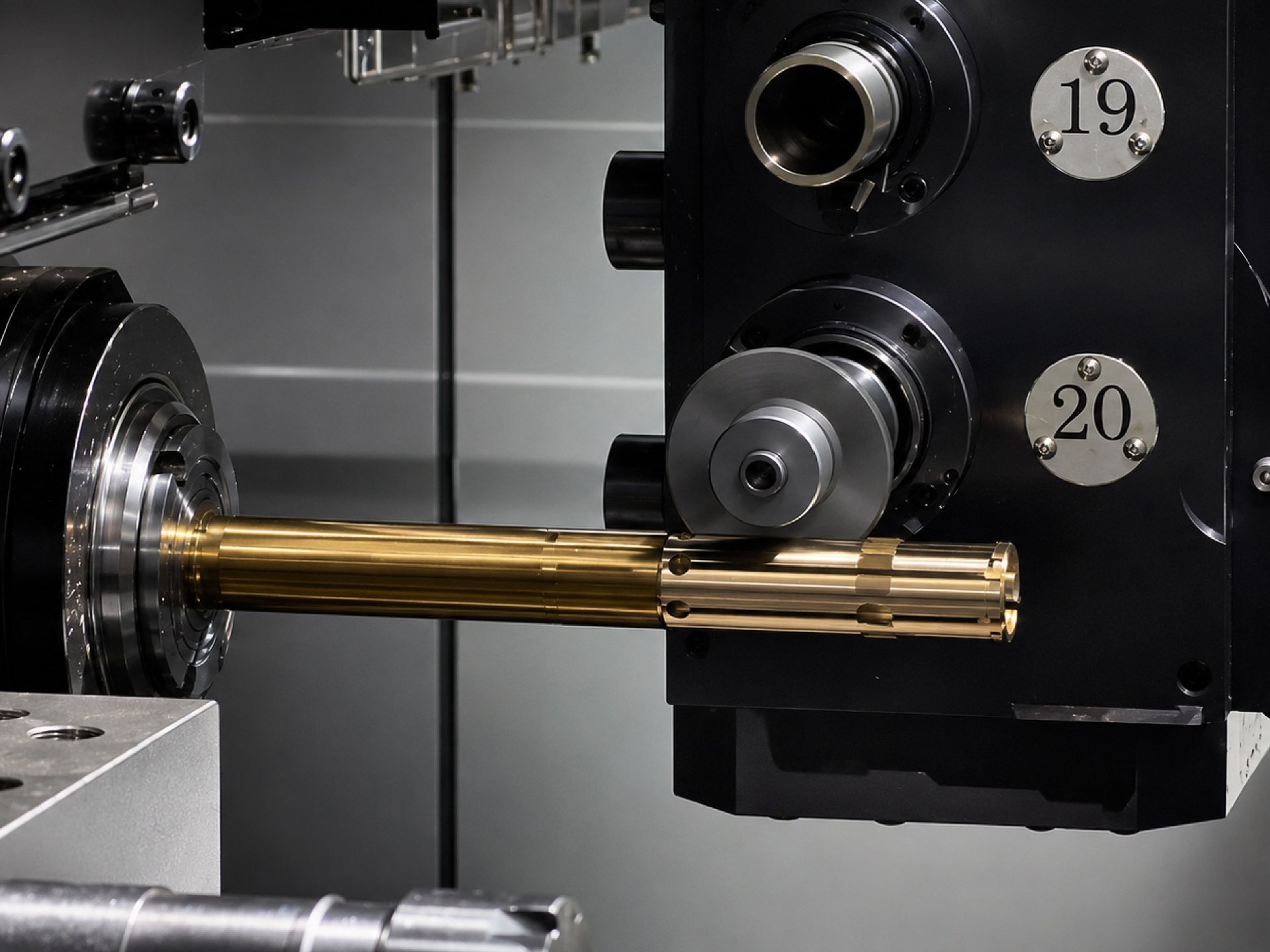
❝Learn the technical differences and usage areas between CNC lathe, CNC automate and CNC sliding machines. Make the right choices for your production.
In machining, the geometry, dimensions, material and production volume of a component play an important role in determining the most suitable CNC machining method. CNC turning, CNC automatic turning and Swiss-type CNC machining are different manufacturing technologies designed to meet different production requirements.
Selecting the appropriate CNC machining method is important for production accuracy, consistency, component quality and manufacturing efficiency.
What Is CNC Turning?
CNC turning is a computer-controlled machining process primarily used for cylindrical and rotational metal components. While the workpiece rotates, the cutting tool moves in a controlled manner to remove material and achieve the required dimensions and geometry.
CNC turning can be used to create various features, including different diameters and lengths, grooves, chamfers, holes and threads.
Examples of components manufactured using CNC turning include:
- Pins,
- Bushings,
- Shafts,
- Fasteners,
- Threaded components,
- Custom metal components.
What Is CNC Automatic Turning?
CNC automatic turning is a manufacturing method commonly used for producing small and medium-sized components in high quantities with consistent and repeatable results.
By accurately defining the machining program and process parameters, large quantities of identical components can be manufactured according to the same quality standards.
CNC automatic turning can be used for electrical components, fasteners, automotive parts, mechanical components and various custom metal parts.
Production continuity and repeatability provide significant advantages, particularly in high-volume manufacturing projects.
What Is Swiss-Type CNC Machining?
Swiss-type CNC machining, also known as CNC sliding-head machining, is a machining method particularly suitable for small-diameter, elongated and high-precision components.
The operating principle of these machines allows small and precise components to be machined in a controlled manner. Depending on the component geometry, multiple machining operations can also be performed within the same production cycle.
Swiss-type CNC machining provides an effective solution for manufacturing small and highly precise components.
Key Differences Between CNC Turning, CNC Automatic Turning and Swiss-Type CNC Machining
The main differences between these three CNC machining methods are related to component geometry, size, precision requirements and production volume.
CNC turning is particularly suitable for rotational components with a wider range of dimensions.
CNC automatic turning provides an efficient solution for high-volume and repeatable component manufacturing.
Swiss-type CNC machining is particularly advantageous for small-diameter components requiring high dimensional precision.
Therefore, it would not be correct to consider one CNC machining method as the best option for every component. The technical drawing, material, dimensions, tolerances and production volume should be evaluated together before production.
How Is the Appropriate CNC Machining Method Determined?
The most suitable production method is determined by first evaluating the technical characteristics of the component. Its diameter, length, geometry, tolerances and material are considered.
Production volume is another important factor. The requirements of low-volume custom manufacturing are different from those of high-volume serial production.
The following criteria are considered when selecting the machining method:
- Component geometry,
- Dimensions and tolerances,
- Material,
- Production volume,
- Machining time,
- Surface requirements,
- Post-machining processes.
ESTON for Precision CNC Component Manufacturing
ESTON manufactures metal components using CNC turning, CNC automatic turning and Swiss-type CNC machining methods according to different production requirements.
With the capability to process materials such as steel, aluminum, brass, copper, free-machining steel and stainless steel, ESTON provides manufacturing solutions for various industrial sectors, particularly electrical subcontracting, automotive, medical, furniture and door-lock-window industries.
For custom component manufacturing based on technical drawings or samples, the most suitable CNC machining method is determined according to the characteristics of the component and the production process is planned accordingly.
Conclusion
CNC turning, CNC automatic turning and Swiss-type CNC machining each offer specific advantages for different manufacturing requirements. Selecting the appropriate machine and machining method is essential for maintaining precision and ensuring production continuity.
With its CNC machining capabilities and expertise in precision manufacturing, ESTON provides solution-oriented metal component production for the needs of different industrial sectors.