

Material Selection in Metal Part Production: Steel, Aluminum, Brass and Stainless
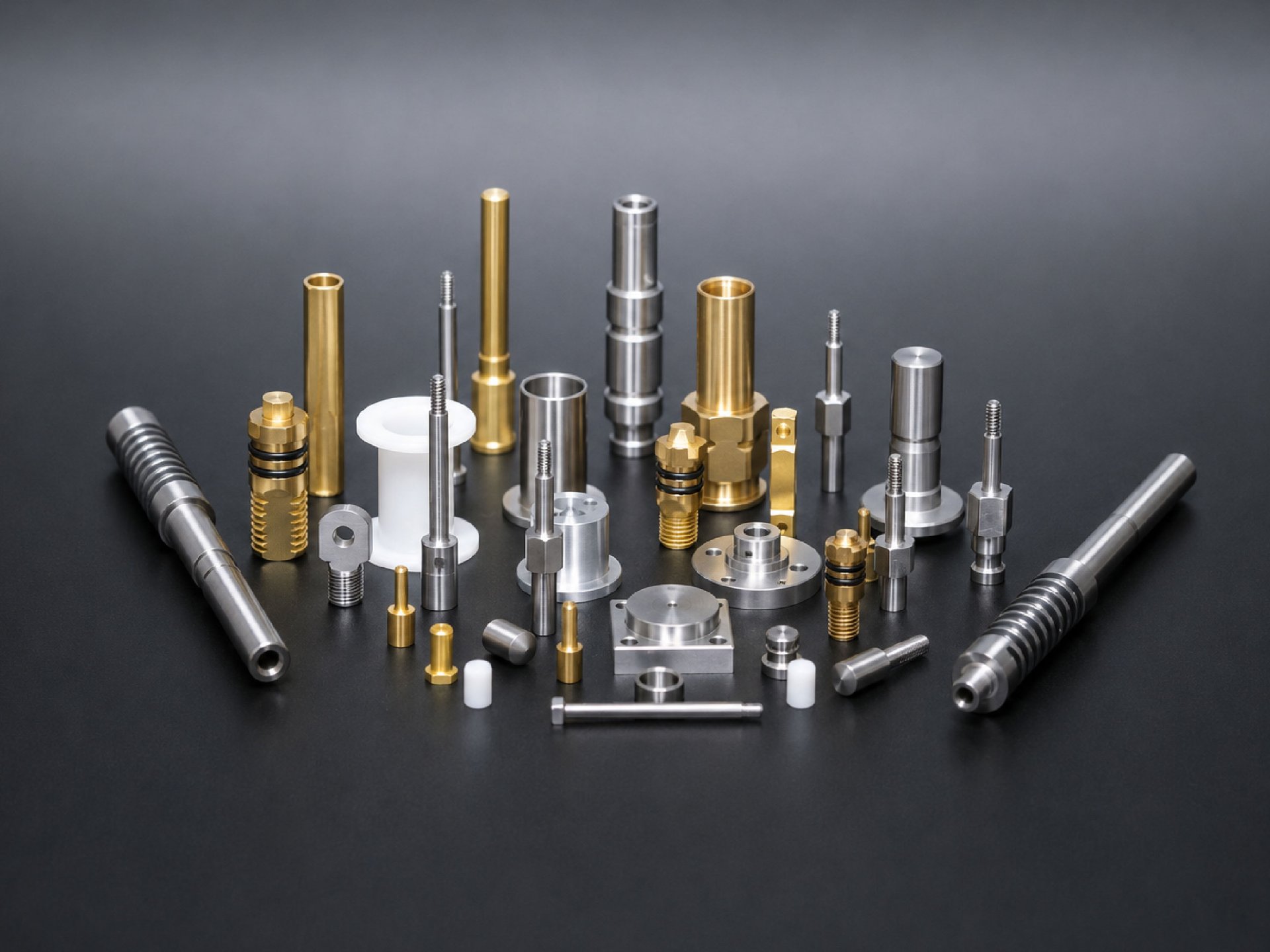
❝Discover the importance and characteristics of material selection in metal part production.
Choosing the right material is an important factor in metal part manufacturing, directly affecting component performance, durability, service life and manufacturing efficiency. Even when the same production method is used, different materials can produce different results in terms of machinability and application performance.
Various materials such as steel, aluminum, brass, copper, free-machining steel and stainless steel can be used in CNC machining and precision metal part manufacturing. Material selection should be based on the component's application, mechanical properties, operating conditions, dimensions and manufacturing method.
Why Is Material Selection Important in Metal Part Manufacturing?
Producing a metal component to the required dimensions is not sufficient by itself. The component must also provide the required performance under its intended operating conditions and reliably fulfill its function within the system.
The following criteria should be considered when selecting a material:
- Mechanical strength,
- Wear resistance,
- Corrosion resistance,
- Operating temperature,
- Application requirements,
- Machinability,
- Production volume,
- Cost.
In precision CNC machining, the machinability characteristics of the material are also important for manufacturing efficiency and surface quality.
Steel in Metal Part Manufacturing
Steel is one of the most widely used materials in machining. The availability of many steel grades with different mechanical properties allows manufacturers to select materials according to specific production requirements.
Steel components can be used in fasteners, mechanical components, pins, shafts and various custom parts.
Selecting the appropriate steel grade according to the operating conditions of the component is important for achieving the required performance.
Aluminum Part Manufacturing
Aluminum is widely used in industrial applications due to its low density and good machinability.
Aluminum can provide significant advantages where lightweight components are required. CNC machining can be used to manufacture aluminum parts with different dimensions and geometries.
Aluminum is commonly considered for custom metal components used in electrical, automotive, machinery and various industrial applications.
Brass Part Manufacturing
Brass is another material commonly used in machining due to its machinability and suitability for various applications.
Brass can be used to manufacture fasteners, electrical components, custom parts and various mechanical elements.
It has an important application area in electrical subcontracting, particularly for certain electrical components.
Stainless Steel Part Manufacturing
Stainless steel is preferred in applications where corrosion resistance is an important requirement. Depending on the operating environment, an appropriate stainless steel grade should be selected.
Stainless steel components with different geometries can be manufactured through CNC machining, including fasteners, custom components and various industrial parts.
Proper material selection helps ensure that the component is suitable for its operating environment and supports long-term performance.
Free-Machining Steel and Copper
Free-machining steels can also be used for components requiring high-volume production. Their machinability characteristics can provide efficient solutions for serial manufacturing.
Copper, on the other hand, is particularly suitable for applications where electrical conductivity is important. It can be used in electrical components and various specialized metal parts.
How Does Material Selection Affect CNC Manufacturing?
Material properties can influence many aspects of the manufacturing process, from cutting tools to machining parameters.
The hardness, machinability and structural characteristics of the material should be considered when determining the appropriate production method. Depending on the component, CNC turning, CNC automatic turning or Swiss-type CNC machining may be selected.
Combining the right material with the appropriate machining method is important for dimensional accuracy, surface quality and production consistency.
Precision Manufacturing of Different Metal Materials with ESTON
ESTON has the manufacturing capability to process various materials for the metal component requirements of different industries.
The production processes can include the machining of:
- Steel,
- Aluminum,
- Brass,
- Copper,
- Free-machining steel,
- Stainless steel.
The appropriate manufacturing method is determined by evaluating the component's application, technical specifications and production requirements. Different dimensions and geometries can be manufactured using CNC turning, CNC automatic turning and Swiss-type CNC machining technologies.
ESTON provides solution-oriented metal part manufacturing services for various industrial sectors, particularly electrical subcontracting, automotive, medical, furniture and door-lock-window industries.