

What is Custom Part Manufacturing? Precision Metal Part Production
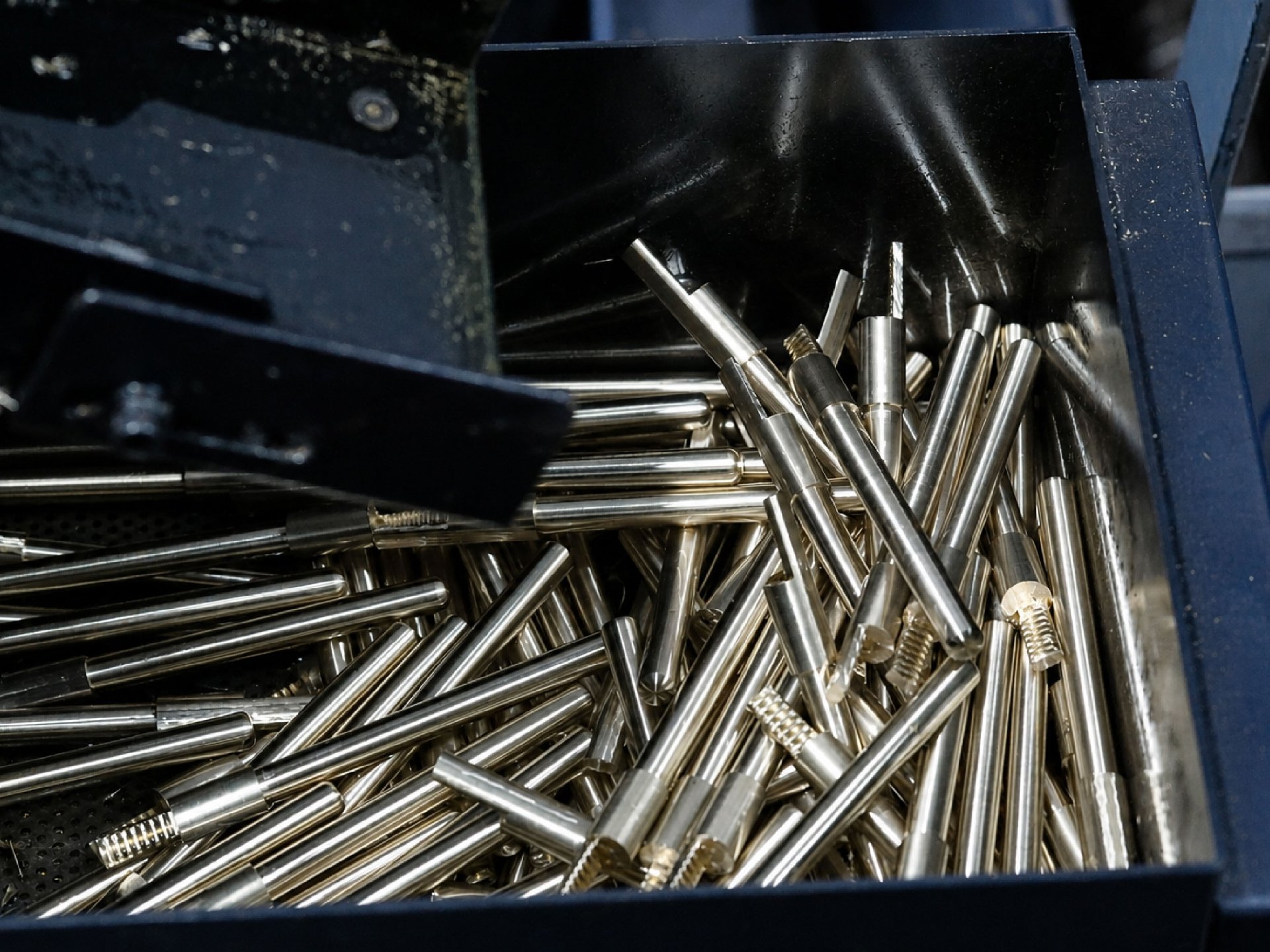
❝Learn the details of custom part manufacturing according to technical drawings and precision metal production processes in our blog.
Not every industrial manufacturing requirement can be fulfilled with standard components. Components used in machinery, equipment and various systems may need to be manufactured specifically according to technical drawings, samples or defined dimensions. Custom part manufacturing therefore provides an important machining solution for the specific requirements of different industries.
In custom part manufacturing, the component's geometry, material, dimensions, tolerances and intended application are evaluated together. CNC turning, CNC automatic turning and Swiss-type CNC machining can be used to manufacture metal components according to defined technical requirements.
What Is Custom Part Manufacturing?
Custom part manufacturing is the process of producing metal components according to a customer's technical drawing, sample or specified dimensions rather than manufacturing them as standard off-the-shelf products.
Depending on the application, components can have different geometries and dimensions. Pins, bushings, fasteners, threaded components and specially shaped metal parts can all be considered custom-manufactured components.
Before production begins, the technical specifications of the component must be properly analyzed to determine the appropriate material and manufacturing method.
Manufacturing Metal Parts According to Technical Drawings
Technical drawings contain the dimensional, tolerance, geometric and other technical information required for manufacturing a component. Correctly interpreting this information is essential for producing the component according to its specified requirements.
The following information is considered during production planning:
- Dimensions,
- Tolerances,
- Hole diameters,
- Thread specifications,
- Geometric details,
- Material specifications.
Based on the technical drawing, the appropriate CNC machining method is selected and the production program is prepared.
Custom Part Manufacturing from Samples
Some manufacturing projects may not have an available technical drawing. In such cases, an existing sample can be used as a reference during production planning.
The dimensions, geometry and application of the sample can be evaluated to determine the information required for manufacturing. Where necessary, the manufacturing method and material properties can also be evaluated according to the technical requirements.
This approach is particularly useful when an existing component needs to be reproduced or when a new component needs to be manufactured for a specific system.
CNC Technologies in Custom Part Manufacturing
The geometry and manufacturing requirements of the component are the primary factors in selecting the appropriate CNC machining method.
CNC turning can be used for rotational components and parts with different diameters.
CNC automatic turning can provide advantages when custom components need to be manufactured repeatedly in high quantities.
Swiss-type CNC machining can be preferred for small-diameter custom components requiring high dimensional precision.
Selecting the appropriate CNC method helps improve manufacturing efficiency while maintaining the required dimensional accuracy.
Material Selection for Custom Metal Parts
The application, operating conditions and technical specifications of a custom component determine the appropriate material.
ESTON has the capability to process various materials, including:
- Steel,
- Aluminum,
- Brass,
- Copper,
- Free-machining steel,
- Stainless steel.
Selecting the correct material is important for the component's strength, service life and suitability for its intended operating conditions.
Precision and Repeatability in Custom Metal Part Manufacturing
In custom part manufacturing, producing the first component accurately is not sufficient when serial production is required. Subsequent components must also meet the same technical specifications.
CNC technologies help ensure that production programs are executed consistently, allowing identical components to be manufactured repeatedly.
Dimensional inspection, appropriate machining parameters and process control play an important role in maintaining consistent quality standards for custom metal components.
Post-Manufacturing Processes
Depending on the application, custom-manufactured components may require additional processes after machining.
Processes such as blasting, vibratory finishing, washing and drying, and packaging can be included as part of the post-manufacturing process.
Proper planning of these operations helps ensure that components are delivered to the customer in the required condition.
Custom Part Manufacturing with ESTON
ESTON provides manufacturing solutions for metal components with different geometries based on technical drawings, samples or specified dimensions.
Custom components with different dimensions and technical requirements can be manufactured using CNC turning, CNC automatic turning and Swiss-type CNC machining technologies.
ESTON manufactures custom metal components for various industrial sectors, particularly electrical subcontracting, automotive, medical, furniture and door-lock-window industries.
Its production approach combines appropriate material selection, CNC machining method selection, dimensional accuracy and production continuity to develop manufacturing solutions that meet specific customer requirements.